
27th May 2026
Your Building Is Already Telling a Story. Is It the Right One?

With insights from Matt Molsberry, Principal Architect at PlainJoe, a Storyland Studio
Winston Churchill once said that we shape our buildings. Afterward, our buildings shape us.
Most church leaders understand this intuitively. They’ve felt the difference between a space that draws people in and one that quietly pushes them away. But knowing it and doing something about it are two different things.
That gap is exactly where design does its most important work.
Every Space Has a Story. Most Just Haven’t Been Told Well.
Walk into any church building and you’re walking into a narrative. The layout, the signage, the entry experience, the kids’ ministry. All of it is communicating something to every person who steps through the door.
The question isn’t whether your space is telling a story. It’s whether that story matches who you actually are.

Evangel Church in Columbus, GA
Matt Molsberry, an architect and design principal at PlainJoe, has spent his career helping over 275 churches answer that question. His approach starts with listening.
“Every client has a unique story. When you meet a client for the first time, you’re meeting a whole group of people, but they have their own personality, their own story, and we have the opportunity to draw it out.”
– Matt Molsberry, Principal Architect, PlainJoe
That drawing-out process follows a clear path. PlainJoe’s model is built around three essential steps: discovering the Characters (the people, personalities, and community that make up the organization), clarifying the Plot (the mission, purpose, and driving vision), and distilling the Setting (the physical and cultural environment the story lives in). When those three elements come into focus, something important happens.
“We like to uncover that narrative and transform it into a guiding Big Idea that then shapes the design of the space throughout the entire process.”
– Matt Molsberry
The BlueSky Conversation
Before any design work begins, PlainJoe leads clients through what we call a BlueSky process, a collaborative session built around listening, asking questions, and seeing the space with fresh eyes.
It sounds simple. It’s actually one of the most valuable things a church can do.
“Most clients can easily point out what their spaces lack or what isn’t working. But when you can actually walk through the space with them, talk about it, point to things. Then you can draw out a vision and a purpose that’s crafted specifically for them and their story.”
– Matt Molsberry

StoneBridge Christian Church in Omaha, NE
This is where a church’s DNA gets uncovered. And that DNA is what separates a well-designed building from a meaningful one.
Once that Big Idea is defined, it stretches across every discipline involved in the project. Architecture. Interiors. Wayfinding. Experiential elements. Everything pulls from the same source.
What Happens When It Works
The proof is in the projects.
Grace City Church started as a small Bible study in Wenatchee, Washington in 2008. Within just a few years, hundreds of new believers had joined the community, and the leadership knew they needed something more permanent than a temporary meeting space. Their vision was ambitious: not just a Sunday gathering place, but a seven-day-a-week hub where worship, creativity, and community could converge.
When PlainJoe came on board, the site was a blank piece of land on a hill overlooking the entire Wenatchee Valley. The team immersed themselves in the culture and landscape of the region, weaving elements of the valley’s orchard heritage, the nearby Columbia River, and the Cascade foothills into the master plan. The result wasn’t just a building. It was a story told through architecture, space, and design.
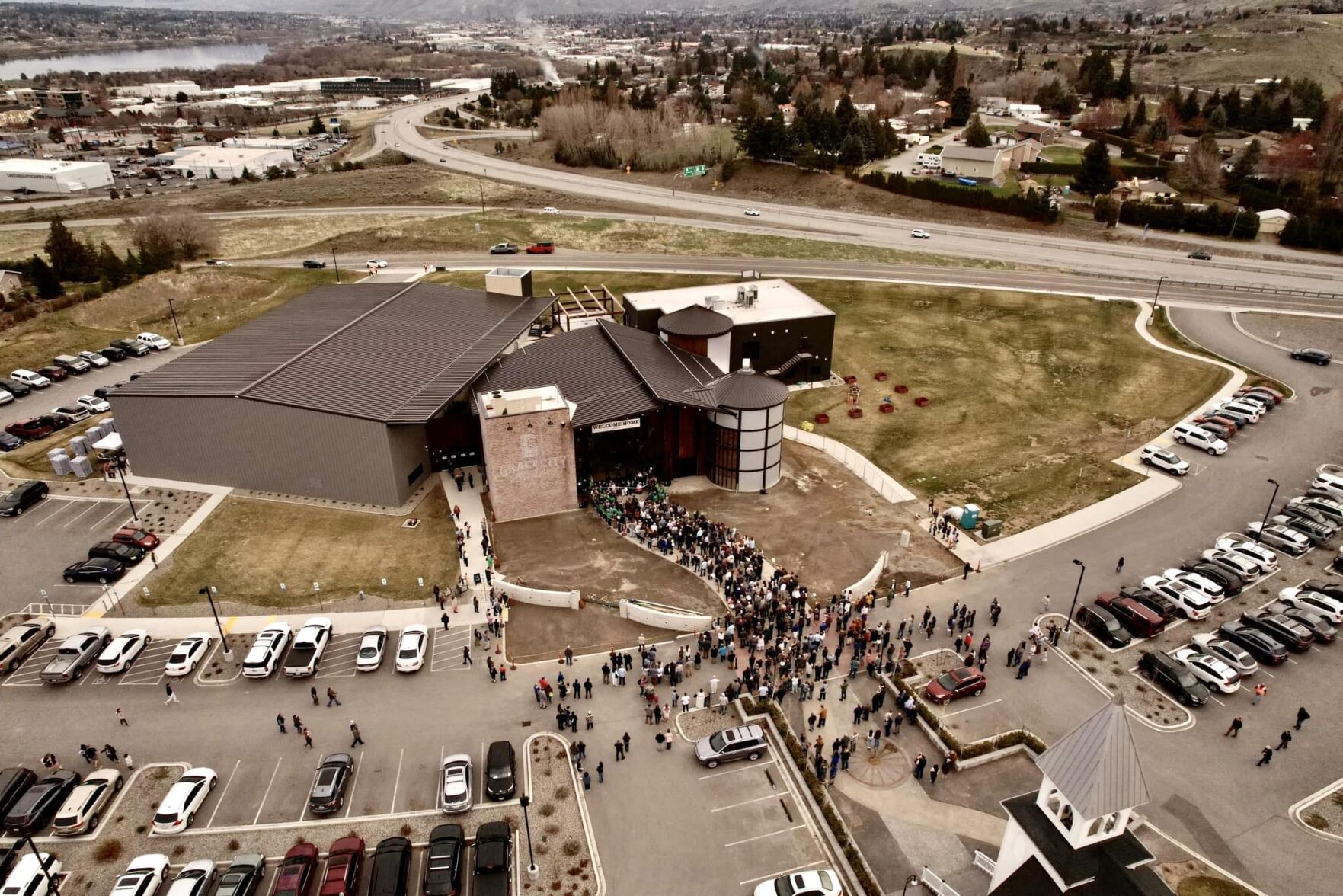
Grace City Church in Wenatchee, WA
Seven phases later, that story is still being written. The campus now includes The Hub, a flexible event center that hosts groups from 50 to 1,000 for everything from Sunday worship to civic gatherings. The kids’ environments are whimsical and story-driven, designed to spark imagination and make children feel like they belong. Co-working spaces and a collaborative coffee hub keep the campus alive throughout the week. Thousands of people connect there each week, and nearly 700 baptisms have taken place on that hill.
None of that was accidental. Each new phase built on the same Big Idea established at the start, so the campus kept telling a coherent story even as it grew. That’s the difference between a building that functions and one that resonates.
“I’ve been trying to convince my wife to move there and be a part of that community. It sounds like I’m joking, but it’s true.”
– Matt Molsberry

Grace City Kids
Practical Needs and Creative Vision Aren’t Opposites
One of the most common concerns church leaders bring to a design process is tension between budget and vision. The fear that being practical means sacrificing something meaningful.
Matt’s perspective: the two aren’t opposites. They’re collaborators.
“You’ve got to rely on things like spreadsheets. And when you use those spreadsheets alongside the creative design, you pull those things together and make refinements. You give and take. But the point is, you don’t want to miss the mark in the end. The practicality has to feed into the design at the same time.”
– Matt Molsberry
The goal isn’t an unlimited budget. It’s a clear Big Idea and the discipline to let that idea guide every decision along the way.
The “Aha” Moment
Matt describes a specific feeling that happens when a design is truly right.
“When a project results in a design that looks like there really is no other option, it really narrows in, and then you know you’re in the zone. Even the client will say, ‘We’re done.’” – Matt Molsberry
That’s the moment a building stops being just a building. It becomes the story your community lives inside.
Churchill was right. Our spaces shape us. The good news is that you get to shape them first.

Granger Community Church in Granger, IN
PlainJoe partners with churches and cause-driven organizations to design spaces that tell their stories. If you’re thinking about a building project, big or small, we’d love to start a conversation.
